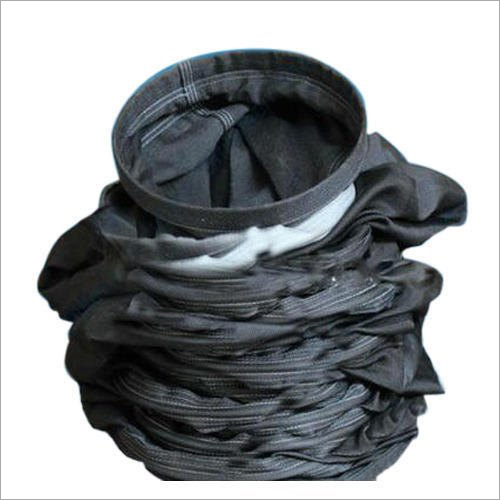
About RABH Filter Bag
RABH FITLER BAGS MADE FROM WOVEN FIBER GLASS FABRIC HAVIGN AT=NTICOLLAPSABLE RINGS, D CAP, HANGING ACCESSORIES.
Specification
|
Length
|
10000 mm
|
|
Usage/Application
|
CEMENT PLANT / FERRO ALLOYS / STEEL PLANT
|
|
Diameter
|
300 mm
|
|
Bag Type
|
RABH FLASS FIBER BAGS
|
|
Color
|
Grey
|
|
Medium Material
|
Woven Glass Fibre With PPFE Membrane
|
Exceptional Filtration EfficiencyEngineered for maximum dust collection, the RABH Filter Bag delivers an impressive efficiency rate of 99.99%. This ensures minimal emission of particulates, supporting regulatory compliance and creating a cleaner workplace environment, which is essential for cement manufacturing facilities.
Durable Glass Fiber ConstructionComposed of high-grade glass fiber, the filter bag provides outstanding durability and resistance to heat and chemical exposure. The 1 mm thickness enhances longevity and structural stability, making it suitable for continuous operation in demanding cement plant applications.
Versatile Industrial ApplicationsAs a trusted exporter, manufacturer, supplier, and trader in India, we offer the RABH Filter Bag to a wide range of industries, with a focus on cement plants. Its woven design and resilient material ensure reliable performance under various operational conditions, ensuring consistent air filtration.
FAQ's of RABH Filter Bag:
Q: How is the RABH Filter Bag used in cement plants?
A: The RABH Filter Bag is installed within filtration systems of cement plants, where it captures dust and particulate matter from the air, ensuring emissions are kept to a minimum and maintaining air quality inside the plant.
Q: What materials are used to manufacture the RABH Filter Bag?
A: The filter bag is crafted from premium glass fiber material, which is woven to form a strong and reliable filtering surface capable of withstanding high temperatures and aggressive chemical environments.
Q: When should the RABH Filter Bag be replaced to maintain efficiency?
A: It is advisable to monitor pressure drop and conduct routine inspections; the filter bag should be replaced when efficiency starts to decline or when physical damage is observed, ensuring uninterrupted filtration performance.
Q: Where are RABH Filter Bags typically applied?
A: These filter bags are most commonly used in cement plants, but they can also be utilized in other industrial settings requiring stringent dust control and high filtration efficiency.
Q: What process does the RABH Filter Bag use to achieve 99.99% efficiency?
A: The bag employs a woven glass fiber construction that traps fine dust particles while allowing clean air to pass through, leveraging both mechanical and electrostatic filtration principles for superior performance.
Q: How does using a RABH Filter Bag benefit cement manufacturers?
A: By providing excellent resistance and superior dust removal, the RABH Filter Bag helps cement manufacturers comply with environmental standards, reduce maintenance downtime, and enhance operational safety.










 Send Inquiry

 Send Inquiry
